Rediscovering OWU’s Old Sulphur Spring with ENVS’s Dr. Toshi Mizuta


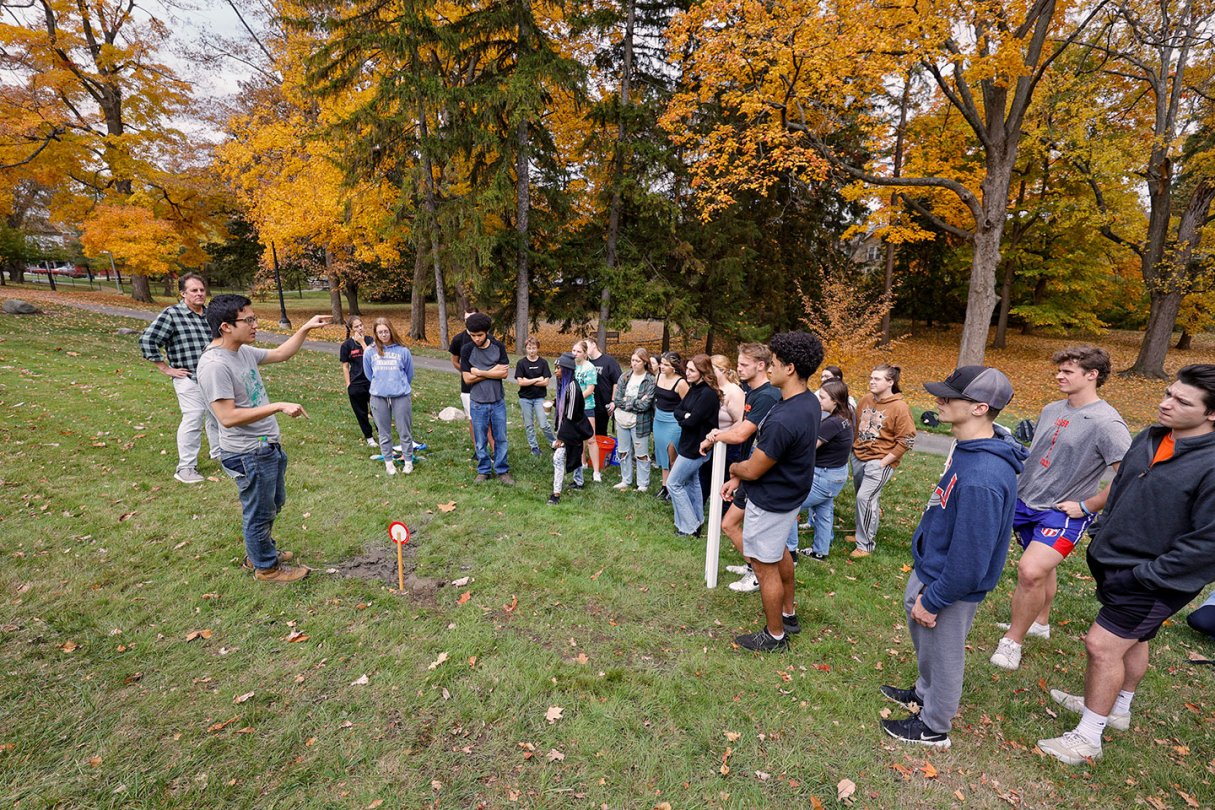
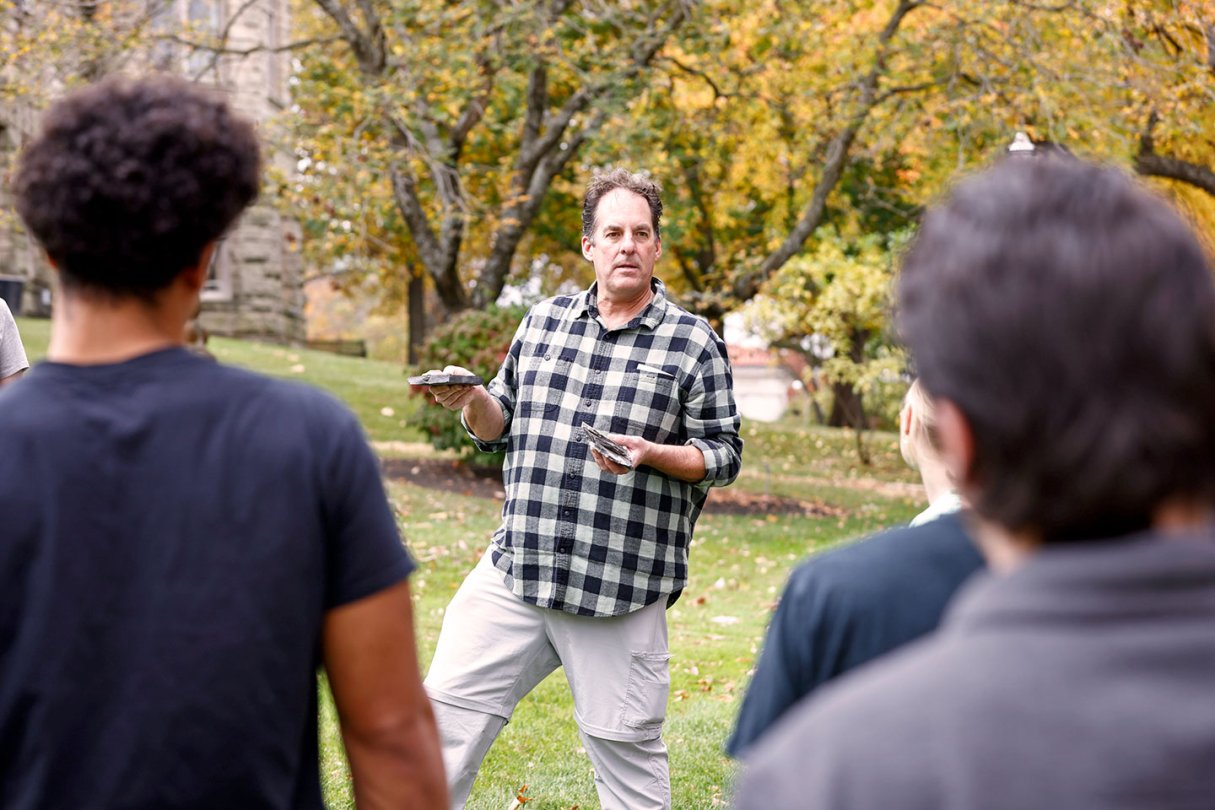
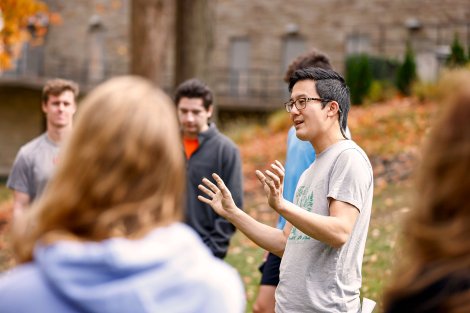
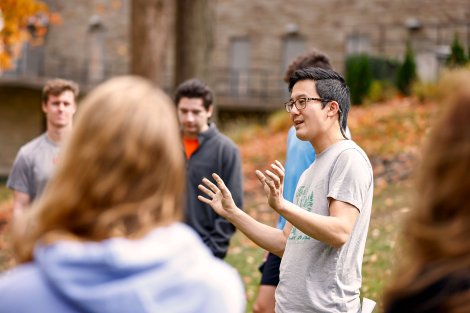
Katsutoshi ‘Toshi’ Mizuta, assistant professor of Environment and Sustainability, explains to his students that Ohio Wesleyan’s iconic Sulphur Spring appears to have shifted overtime. He thinks he has found the relocated underground waterway. (Photos by Paul Vernon)
Article Reproduced from here

The Sulphur Spring

Ohio Wesleyan Students Dig Into OWU History to Understand Status of Underground Waterway

By Cole Hatcher

When Katsutoshi “Toshi” Mizuta says he and his Ohio Wesleyan University students are digging for clues, he means it literally.

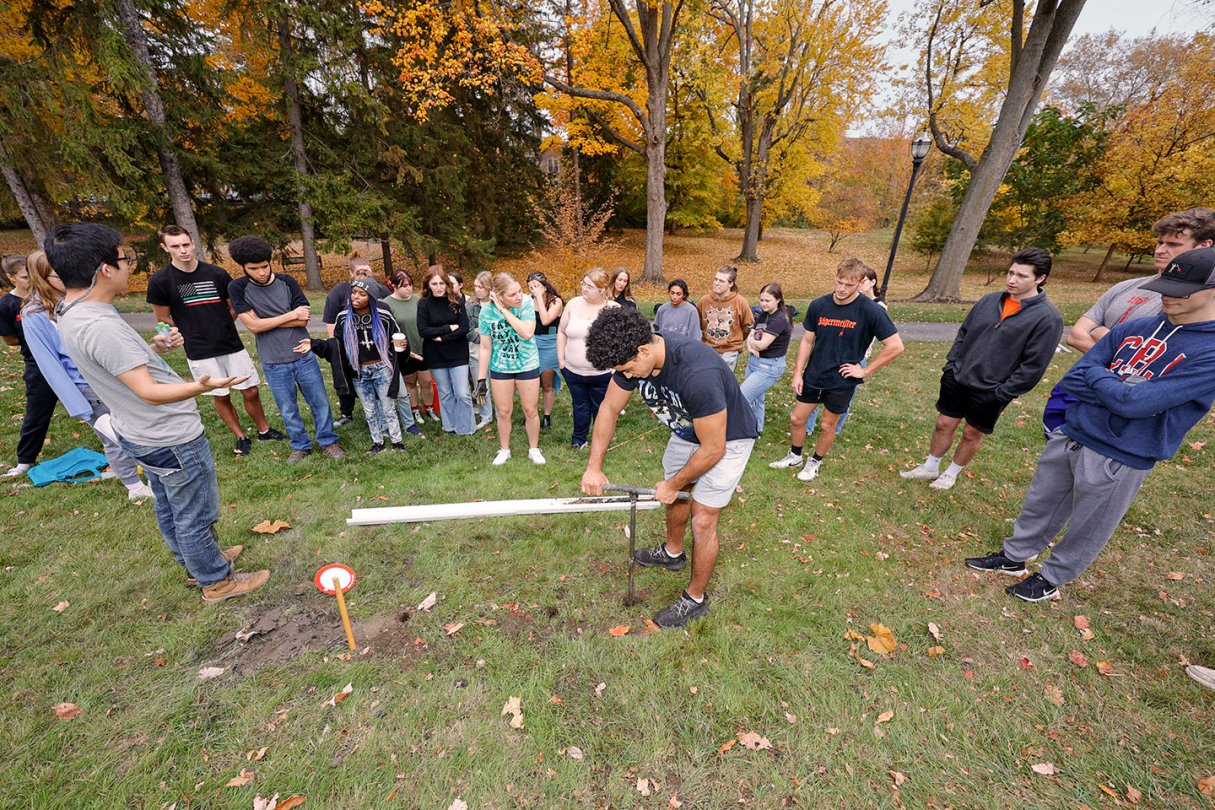
Using a handheld auger, Mizuta, Ph.D., and students in his two Environment & Sustainability 111 courses recently excavated and examined soil from an OWU hillside south of the Delaware Run. Mizuta, who joined Ohio Wesleyan in August, is an expert in soil health, climate-smart agriculture, and ecosystem services.
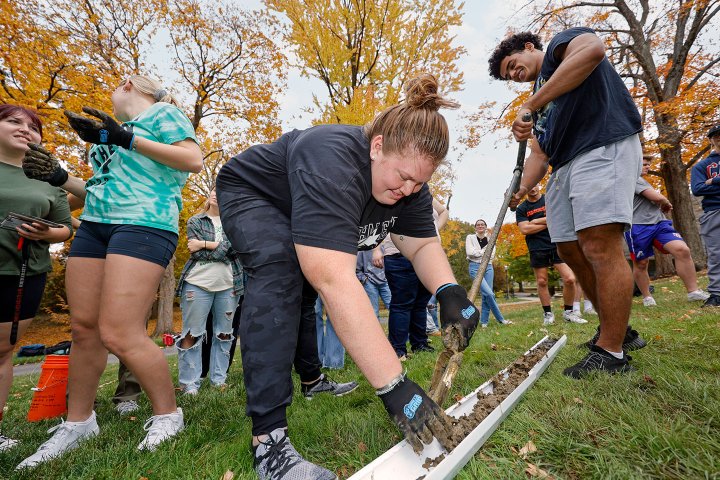
Caroline Schlorb ’25 helps to remove clay dug up by Othman Taha ’26 as the class prepares to analyze the soil.

Water, Water Anywhere?

Mizuta and his students are working to solve the mystery of what happened to the historic Sulphur Spring that runs through the northeast section of campus. The spring, one of the most iconic features of OWU’s 200-acre campus, no longer fills the stone basin created to capture it in the 1830s. During that era, a spa hotel was built on what is now campus land to showcase the spring and seduce health-conscious consumers into visiting the site.

When the hotel closed, local residents led by the Rev. Adam Poe purchased the land to support the founding of Ohio Wesleyan in 1942. During OWU’s first 100 years, the Sulphur Spring maintained a prominent role in campus life – the site of both social gatherings and quiet study.

For several years, however, the spring basin has been inexplicably dry.

The Mystery of the Slippery Stream

While walking across campus over the past few years, John Krygier, professor of Environment & Sustainability, noticed an unusually wet section of hillside behind Merrick Hall. The grass was a little different in color, too, and lawncare equipment seemed to slip and slide while working in the area, recalls Krygier, Ph.D.

As he pondered the site, Krygier thought about the history of the hillside, formed as part of a canyon during the last glacial period when huge amounts of meltwater flowed through the area. “After that, the Run shrank, and much of what is now downtown Delaware was wetlands.”

“Dig 10 to 15 feet down,” he says, “and you’ll find 400-million-year-old Ohio shale, where it meets even older limestone known as ‘blue limestone.’ The shale had lots of organic material in it, leading to chemical reactions that produce the distinctive smell.”

Despite his knowledge of the area, Krygier wondered what else lay buried underneath the OWU hillside. So, when Mizuta was looking for a spot to study soil with his students, Krygier suggested the campus site.
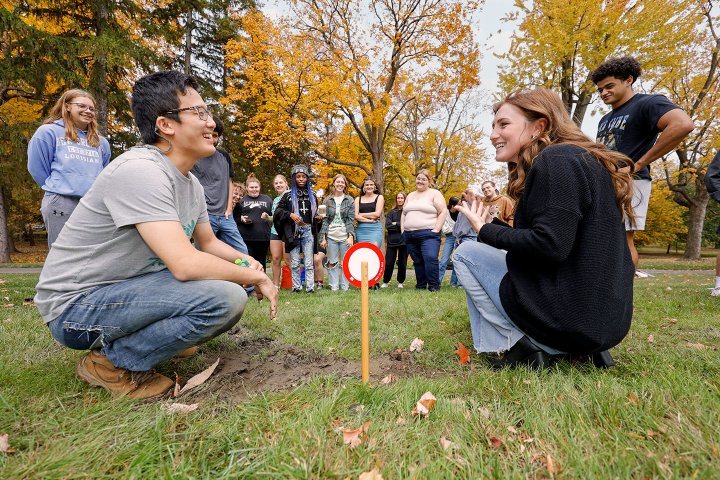
Professor Toshi Mizuta smiles as student Natalie Baker ’25 says she doesn’t need to get any closer to the groundwater to smell its distinctive sulfur smell.

A Scent-Sational Discovery

As Mizuta and his students stand on the hillside during their recent class, he shows them a spot where he previously extracted a core of earth. Water is clearly visible in the deep hole, and he encourages the students to smell the murky liquid.

Natalie Baker ’25 of Fredericktown, Ohio, and Othman Taha ’26 of Dublin, Ohio, take turns leaning down. “I can smell it,” Baker says, noting no need to press her nose any closer to the ground. “It wafts.”

Taha also notices the strong smell that the class ultimately compares to rotten eggs.

“Do you know what smells like rotten eggs?” Mizuta asks.

The answer, he says, is sulfur. And Ohio Wesleyan’s Sulphur Spring is the only such spring recorded in the vicinity. (Other springs identified in the area are iron springs.) So, could this be OWU’s iconic subterranean waterway?

Of Lawn and Limestone

“Why do you think we have water here? Any hypotheses?” Mizuta asks his students. Possibilities include runoff from the buildings that now exist in the area or, perhaps, a waterline leak. To gather more information, Mizuta asked Del-Co Water Company, with the help of water quality intern Graham Steed ’23, to test the water for pH and sulfur levels. The results showed the groundwater has a weaker alkaline level but a sulfur level nearly three times higher than the Delaware Run.

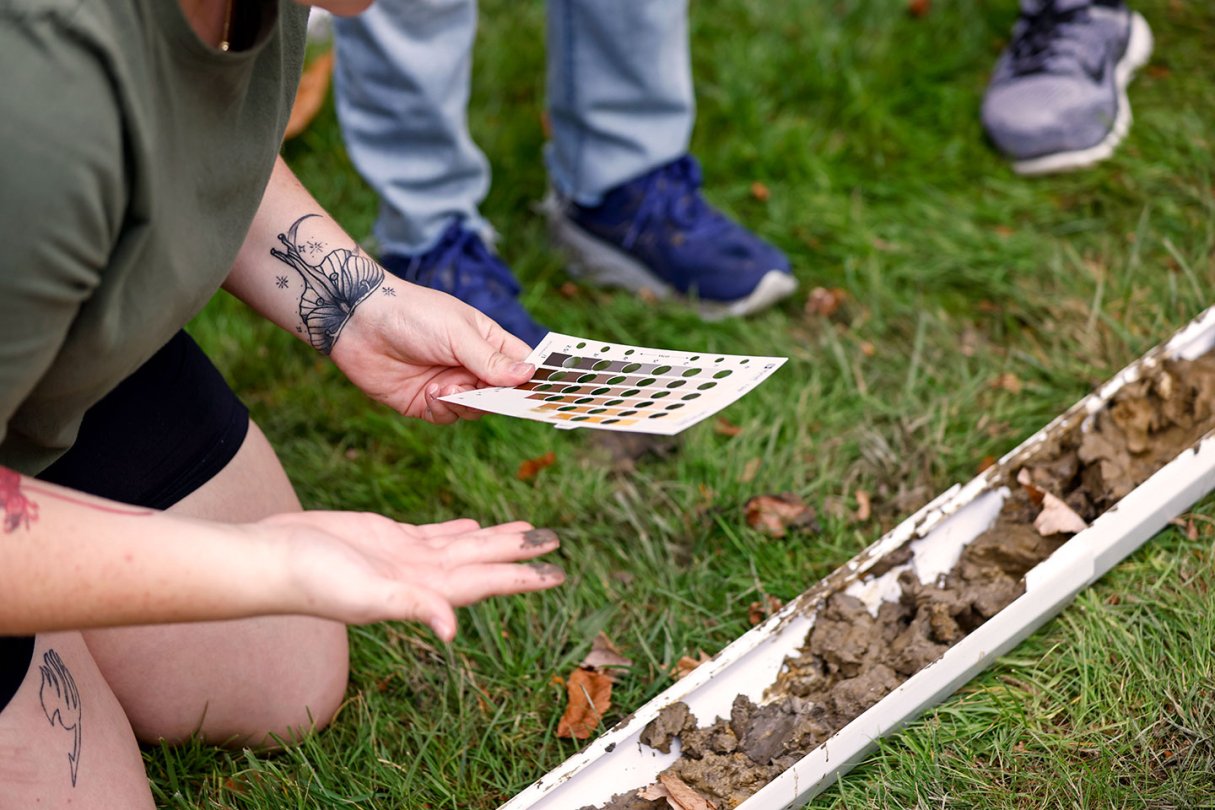
As part of the day’s lesson, Mizuta wants his students to use the auger to extract a fresh core of earth to study the soil quality at different depths. Taha muscles the metal rod into the dirt and extracts sample after sample, watching the soil change in color and density.

After a while, Caroline Schlorb ’25 takes over the digging and discovers groundwater at about 2 feet down. The students also notice the distinctive rotten egg smell is getting stronger.

Then, Mizuta asks the students to ponder his previous findings. The upper soil has a lower pH, but the lower soil has a significantly higher pH level. How is this possible?

With his help, the students puzzle it out: The upper soil is affected by the growing lawn, while the lower soil is impacted by the limestone deposits found throughout the area. Limestone is an alkaline and raises the pH level in the soil. The shale adds the distinctive sulfur smell.
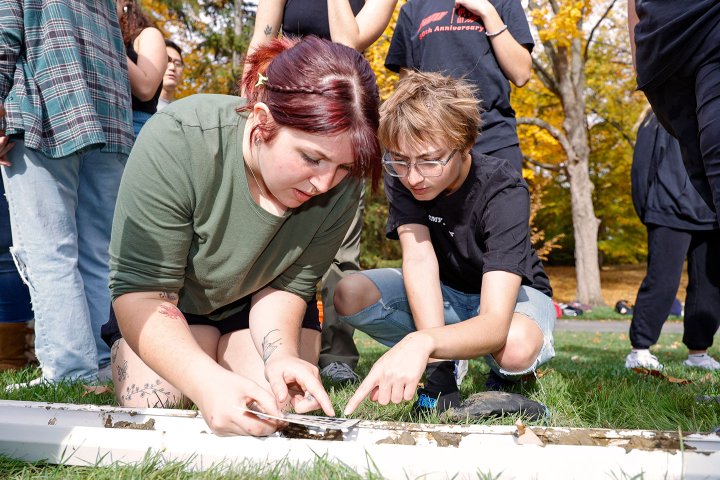
Emma Biggs ’26 (left) and Aaron Gonzales ’26 examine how soil changes with depth using a Munsell Soil Color Book chart.

A Spring Runs Through It

Examining all of these variables, Mizuta concludes, “It is the Sulphur Spring. That’s what we’re thinking.”

But where exactly is the relocated spring? Determining a precise location, he says, will require studying the topography of the area, especially how water moves through the terrain.

Krygier adds it might even be possible to restore water flow to the spring’s ornamental basin, but the difficulty of that endeavor is still to be determined. Factors include why the spring moved – was it natural migration? The result of construction? A combination of factors? Rerouting the water flow also depends on whether the mouth of the spring is higher or lower than the basin, he says, and, consequently, how gravity affects the water flow.

And these questions, both professors agree, are mysteries for another day and another investigation.

Learn more about Ohio Wesleyan’s Department of Environment & Sustainability, which offers majors in Environmental Science, Environmental Studies, and Geography, at owu.edu/environment.
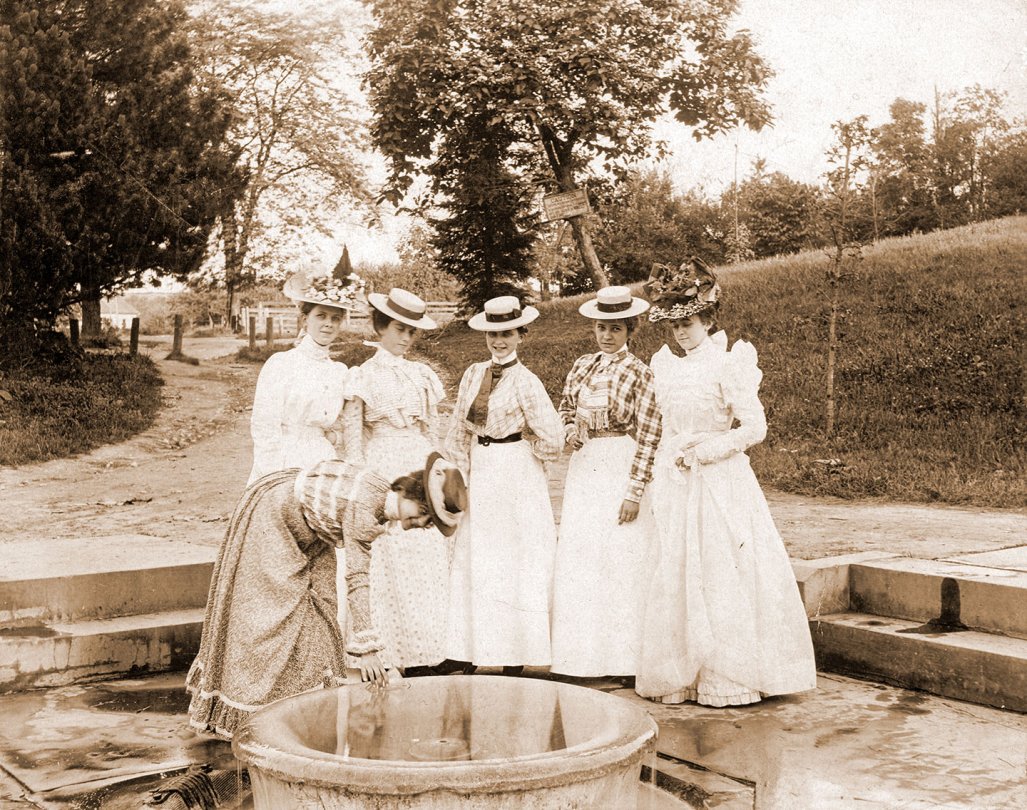
 

OWU Faculty Sean Kay on California’s Stanislaus River

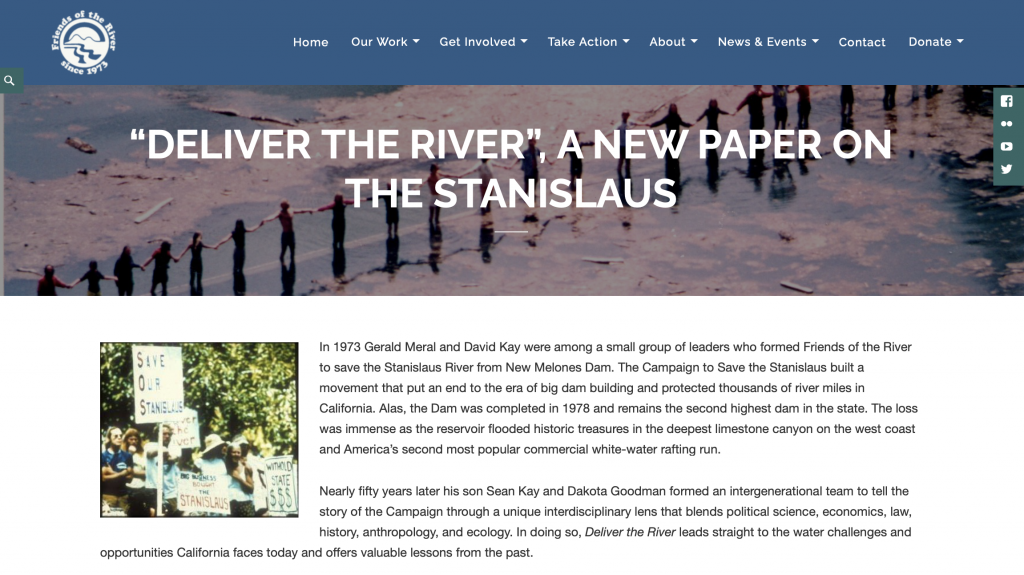
Dr. Kay teaches, among other things, PG 280 Environmental Politics and Policy at OWU. He’s co-authored a new article on environmental policy and the Stanislaus River in California (link).

As many know, in the last few years, I’ve taken a dive into teaching and research on environmental issues.  I’m very excited that this paper that I have co-authored with Dakota Goodman has been published by Friends of the River this week – “Deliver the River:  States’ Rights, Cost-Benefit, and Environmental Justice on California’s Stanislaus River.”  Friends of the River is the non-profit in California that my father helped to co-found in 1973, to lead the campaign to save the Stanislaus from a wasteful and unneeded New Melones Dam and Reservoir.  After my father passed away, I got his files on this, and we were able to use those to rerun and update the case against the dam, including cost-benefit assumptions, and we have shown the extent of the loss, and lies, that were used to sell the dam – and document the harm it has done ecologically and to local communities.  And, we show the way forward to deliver the river, finally about 50 years later, so that the Camp 9 Run on the Stanislaus can finally be liberated and a better way of water management achieved in California.

I hope folks can take a few minutes and read (and feel free to share!) the article – it’s both a strong personal tribute to my dad, but more importantly to the river we all lost, and yet still remains under the reservoir, waiting to flow once more.

More information here.

2nd Annual Delaware Run Watershed Walk: September 22, 2019

Mostly hidden and invisible, Delaware Run weaves itself through the fabric of the city and is often overlooked. The Watershed Walk on Sept. 22, 2019, will shed light on this important natural resource.

2nd Annual Delaware Run Watershed Walk: September 22, 2019

RSVP for this FREE event at Eventbright

Bring rubber boots or old shoes (and a towel for drying off)

Presented by the Boardman Arts Park and the Central Ohio Communities Project

When: September 22, 2019

1:00 p.m.-3:00 p.m.: Choices for level of involvement: a “short walk” (45 minutes), or a longer walk (90+ minutes), with 3-4 entry or exit points. Led by Local naturalists, historians, MAD Scientist Associates and others.

3:00 p.m.-4:30 p.m.: creation of a “Watershed mural”, Badminton and Bocce Ball, upcycle art creation, and other “earth art and sports” (non-fossil fuel fun!)

Mostly hidden and invisible, Delaware Run weaves itself through the fabric of the city and is often overlooked. The Watershed Walk on Sept. 22, 2019 will shed light on this important natural resource.

Participants can choose to do a deep exploration of the run or shorter jaunts along its course.

Local scientists and experts will lead our walks and will explore the history, ecology and geologic features of the stream scavenger hunt style. After the walks, we will meet at the Boardman Arts Park to enjoy refreshments, music and educational programming about the nature nearby.


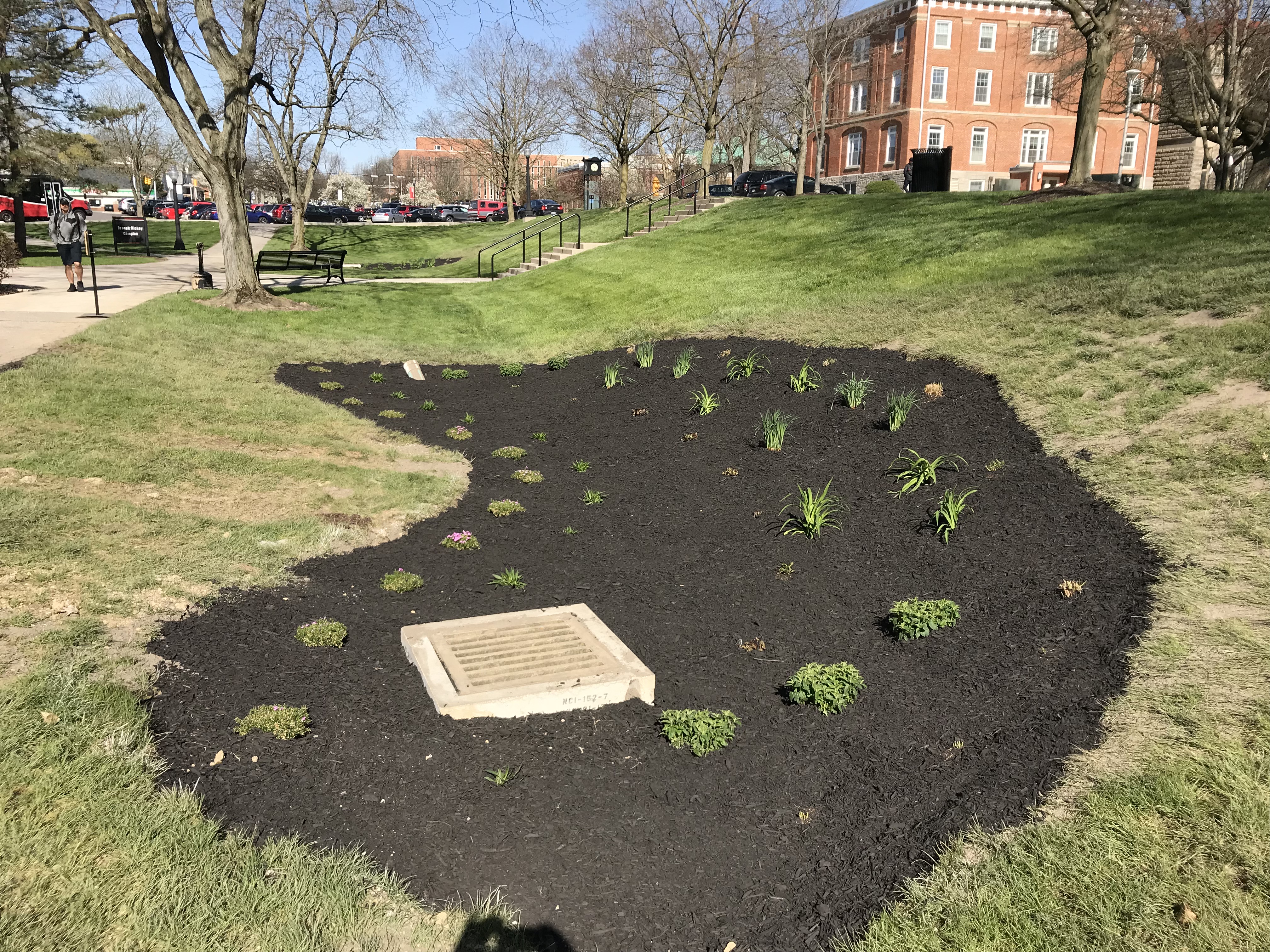
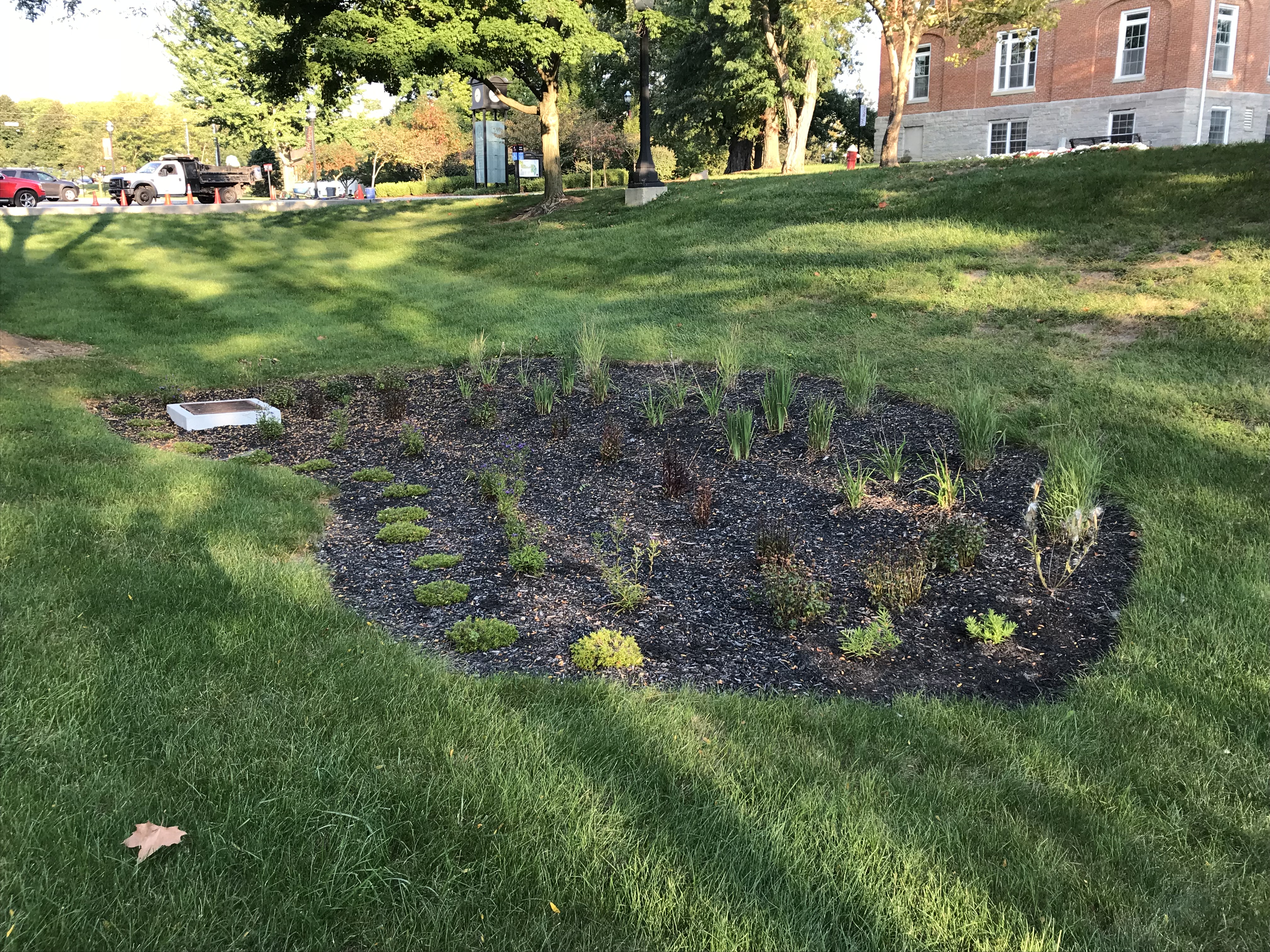
New Bio-retention Cells (rain gardens) by Branch Rickey Arena on OWU’s Campus

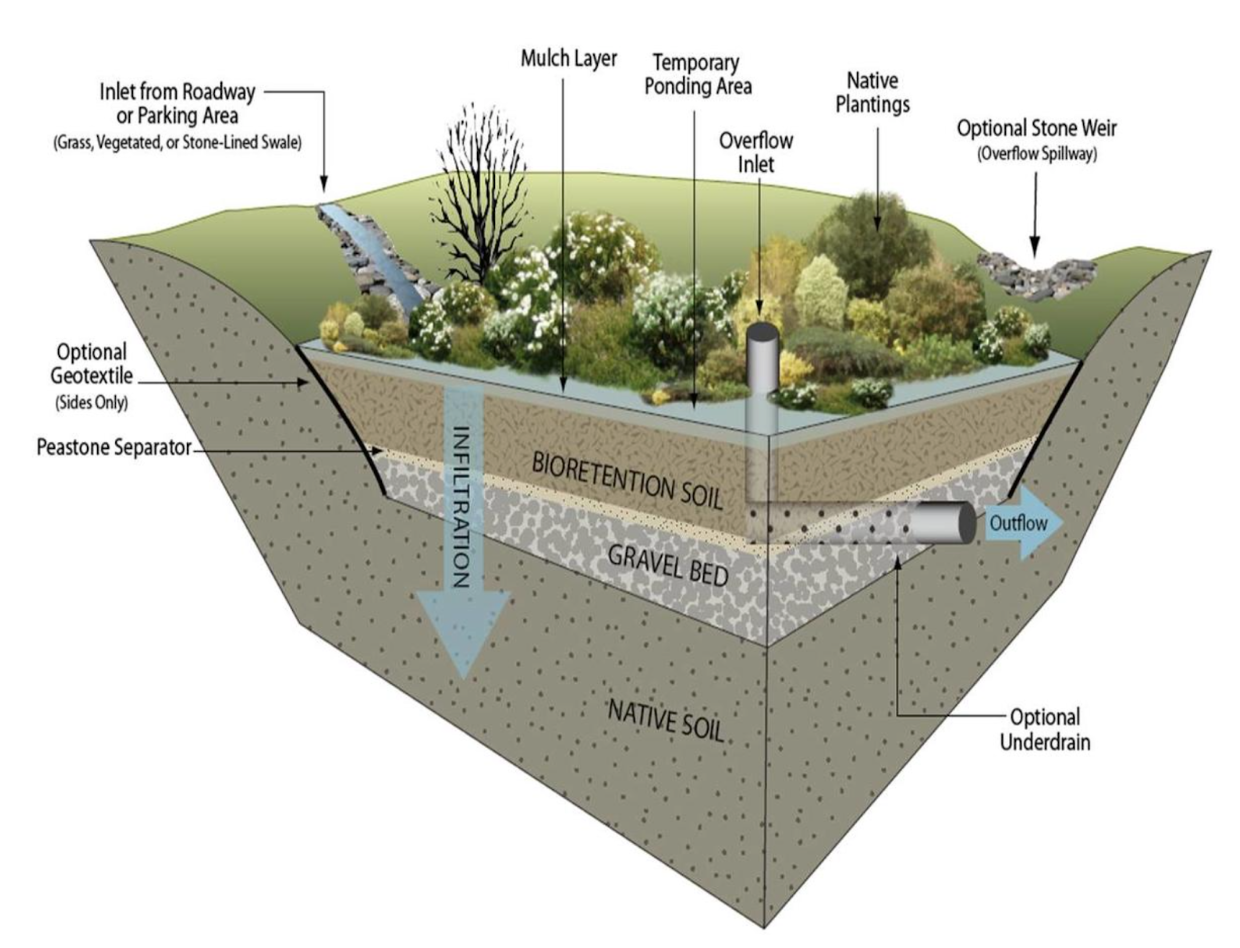
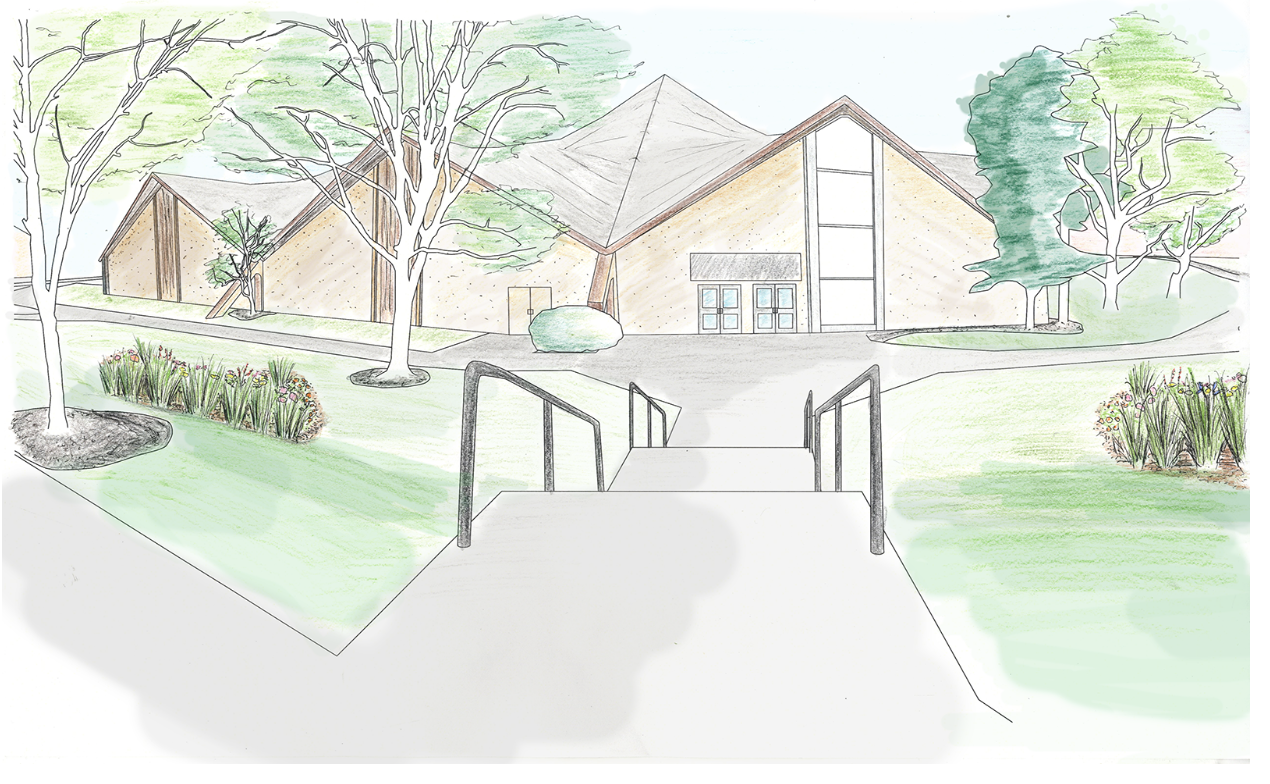
Drawing by Jonathan Stechschulte

Branch Rickey Rain Garden (Bio-retention) Development on OWU Campus

Participants: Janelle Valdinger (City of Delaware, OWU), Dr. John Krygier (OWU Geography & Environment & Sustainability), Brad Stanton (City of Delaware), Perry Mickley (City of Delaware), Department of Parks and Recreation (City of Delaware), Department of Engineering (City of Delaware), Carolyn Cicerichi (City of Delaware)

Contact: Janelle Valdinger (JValdinger@delawareohio.net), John Krygier (jbkrygier@owu.edu)

This rain garden project is the outcome of an Environment & Sustainability program student project, in collaboration with the campus Sustainability Task Force, OWU Buildings & Grounds, and the City of Delaware.

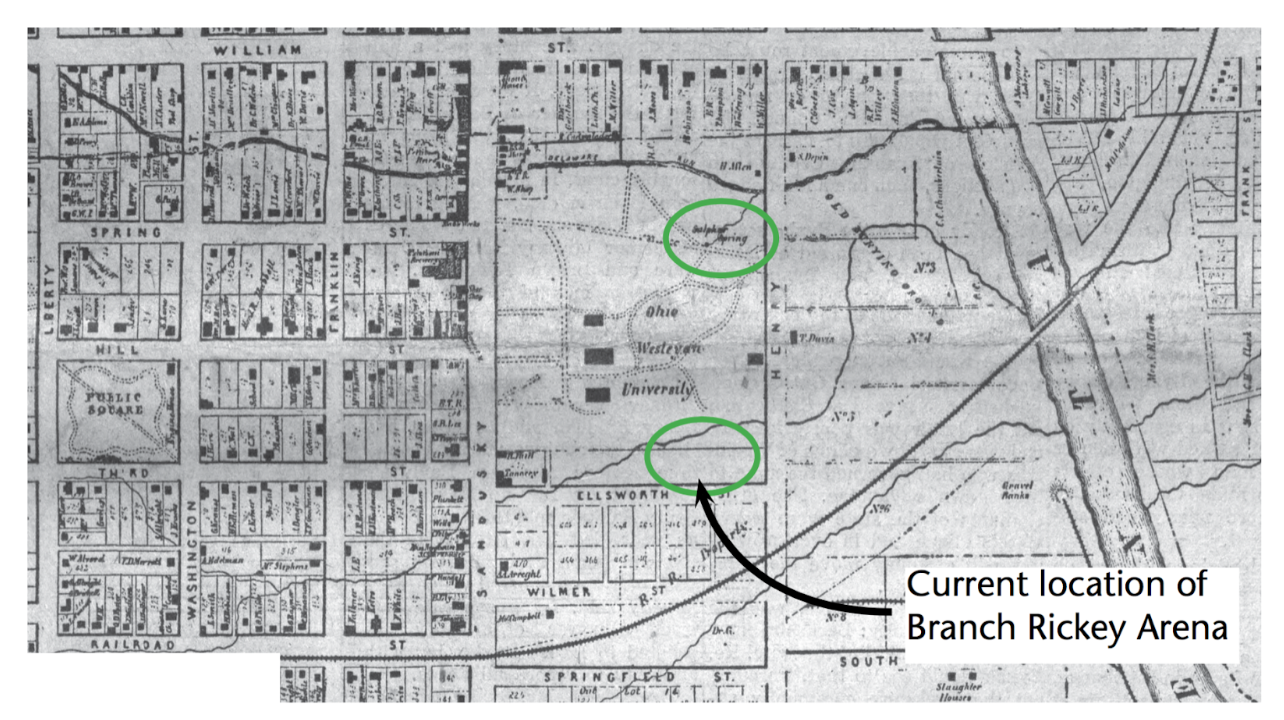
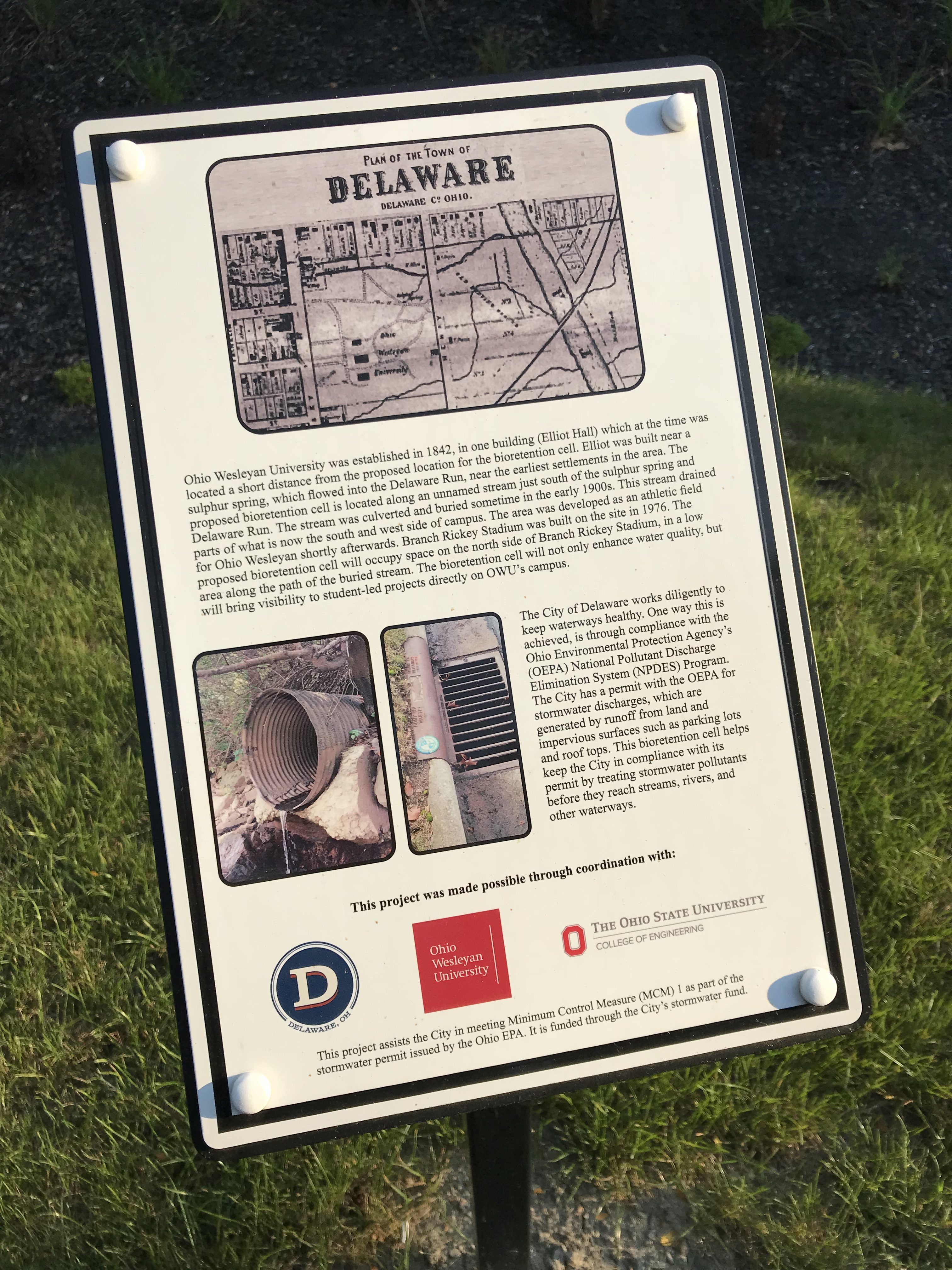
Ohio Wesleyan University was established in 1842, in one building (Elliot Hall). Elliot was built near a sulfur spring, which flowed into the Delaware Run, near the earliest settlements in the area (upper green oval, below) The proposed rain garden is located along an unnamed stream just south of the sulfur spring and Delaware Run. The stream was buried sometime in the early 1900s. The area was developed as an athletic field for Ohio Wesleyan shortly afterward. Branch Rickey Arena was built on the site in 1976.

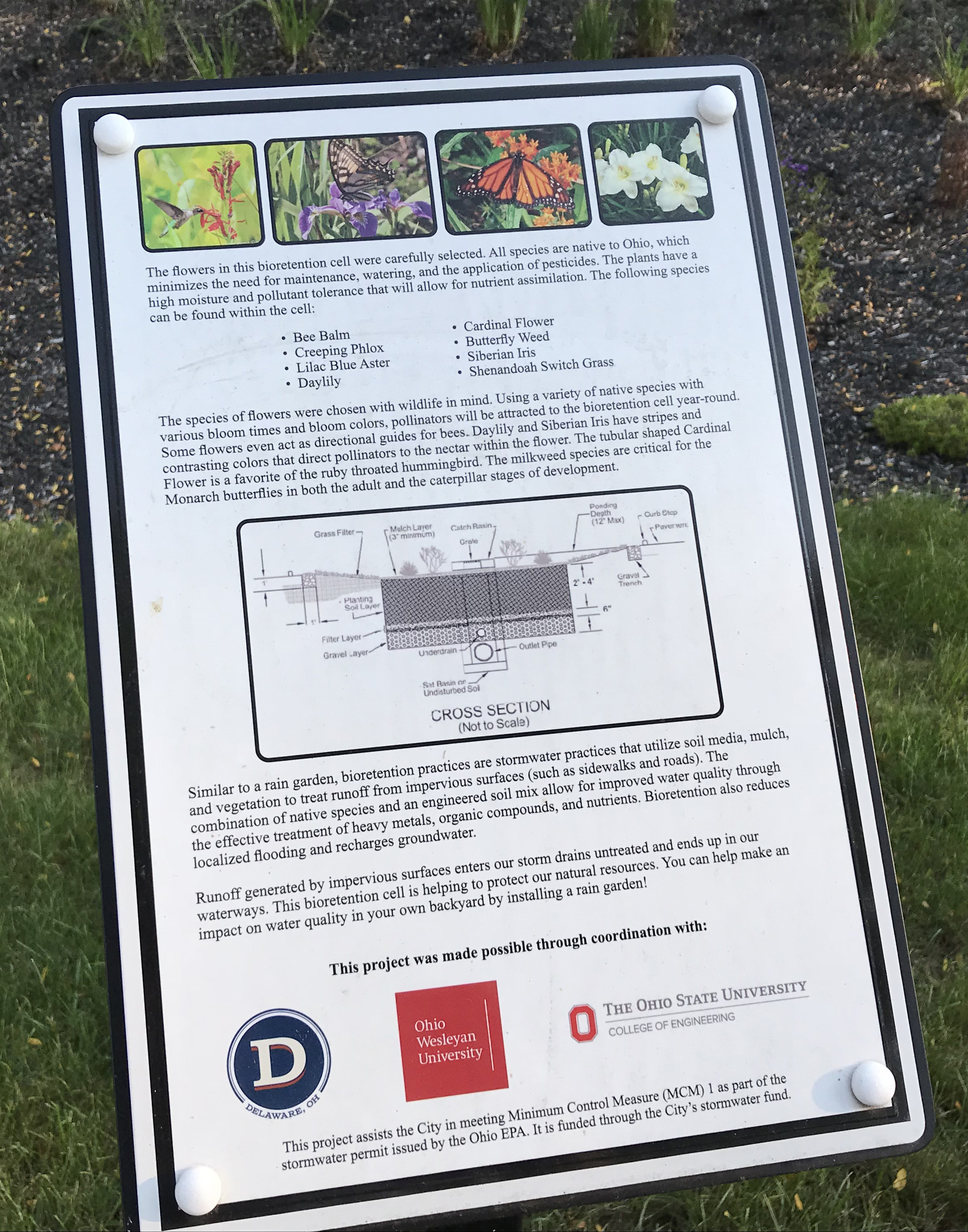
What is a Bio-Retention Cell? MS4 Permit/Storm-water Project: The City of Delaware works diligently to keep waterways healthy. One way this is achieved is through compliance with the Ohio Environmental Protection Agency’s (OEPA) National Pollutant Discharge Elimination System (NPDES) Program. The City has a permit with the OEPA for stormwater discharges, which are generated by runoff from land and impervious surfaces such as parking lots and rooftops. This bio-retention cell helps keep the City in compliance with its permit by treating stormwater pollutants before they reach streams, rivers, and other waterways.

Rain gardens are designed and developed to improve water quality in nearby bodies of water to ensure rainwater becomes available for plants as groundwater rather than being sent through storm-water drains out to local tributaries. Rain gardens have the ability to reduce the amount of pollution reaching nearby streams and rivers by 30%. The purpose of this project is to design and implement two rain gardens located on the north side of Branch Rickey Arena/Gordon Field House.

Two storm basins have were located and inspected by the City of Delaware Department of Public Utilities as approved project sites. Two planning meetings took place with the Department of Engineering, Department of Parks and Recreation, and management to determine the design, layout, plant requirements, grading requirements, and labor needed for the said project. Calculations were made to determine the exact design layout.

Drawing by Jonathan Stechschulte

A quote from the City Arborist placed a $12,500 price tag on this project, and the funding was from a City of Delaware grant. OSU Landscape Architecture graduate student Jonathan Stechschulte provided the excellent drawings of the project, which OWU’s administration required before moving forward with the project.

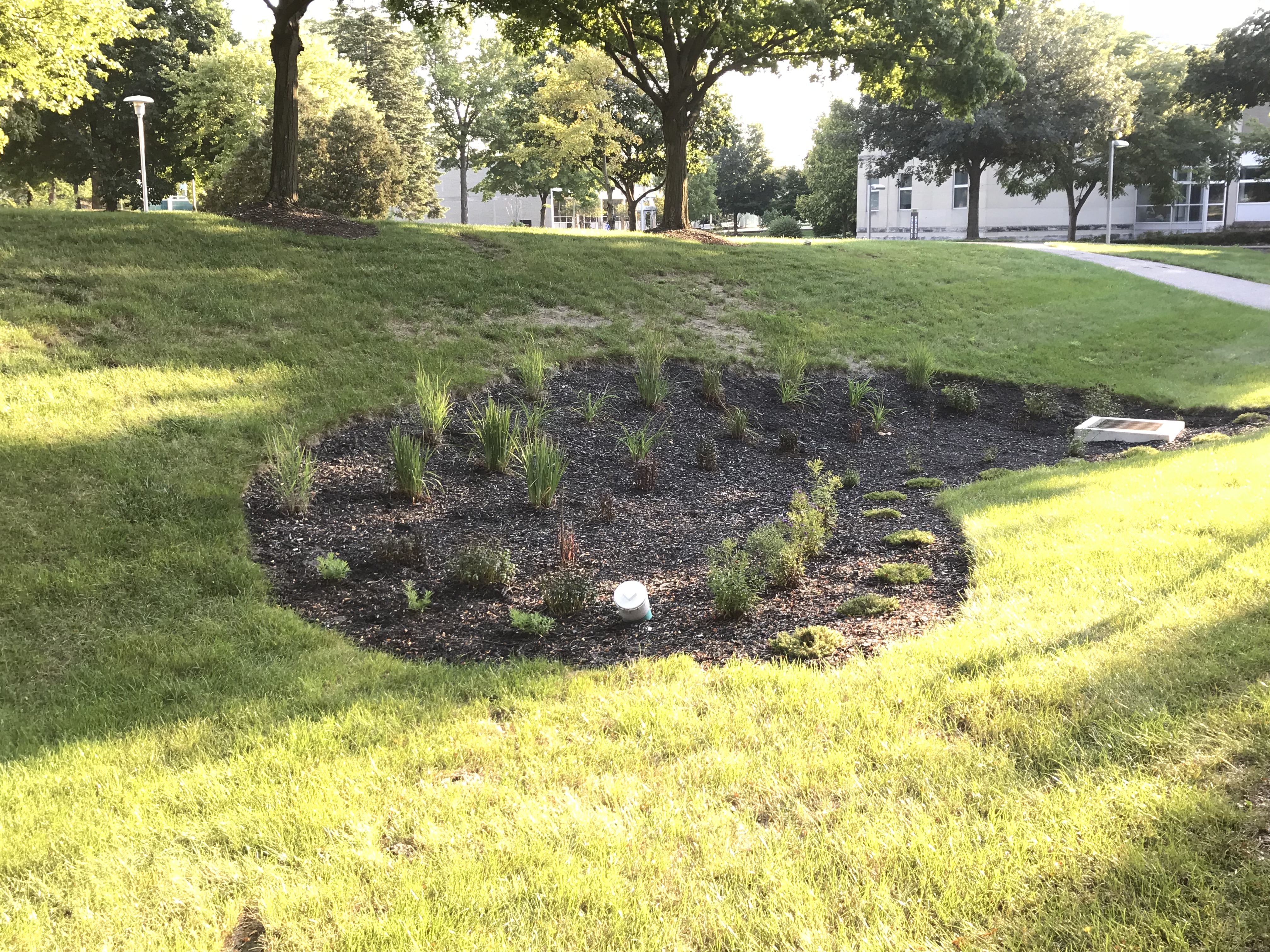
Fall 2018: 95% of plants planted in the spring survived, with a minimum of maintenance.

Maintenance after the project has been completed will be shared by OWU’s Buildings & Grounds as well as being part of a semester and summer internship (focused on watershed issues). Interns will monitor, maintain, and report on the rain gardens, along with assisting our Watershed Coordinator and Department of Public Utilities employees with other tasks.

This project is part of a larger effort to create a more sustainable, and green infrastructure within the City of Delaware and especially on OWU’s campus. The possibility of this kind of project spreading to more locations on and around campus is high. Students can come back to this project year after year, choose a single storm basin or a collection of storm basins, create a design and implementation plan, and present it to the Department of Public Utilities. The Department of Public Utilities creates a capital improvement budget, along with a working budget every year to every five years, creating a constant allocation of funds for projects similar to this.

Building the bio-retention cell, Spring 2018:

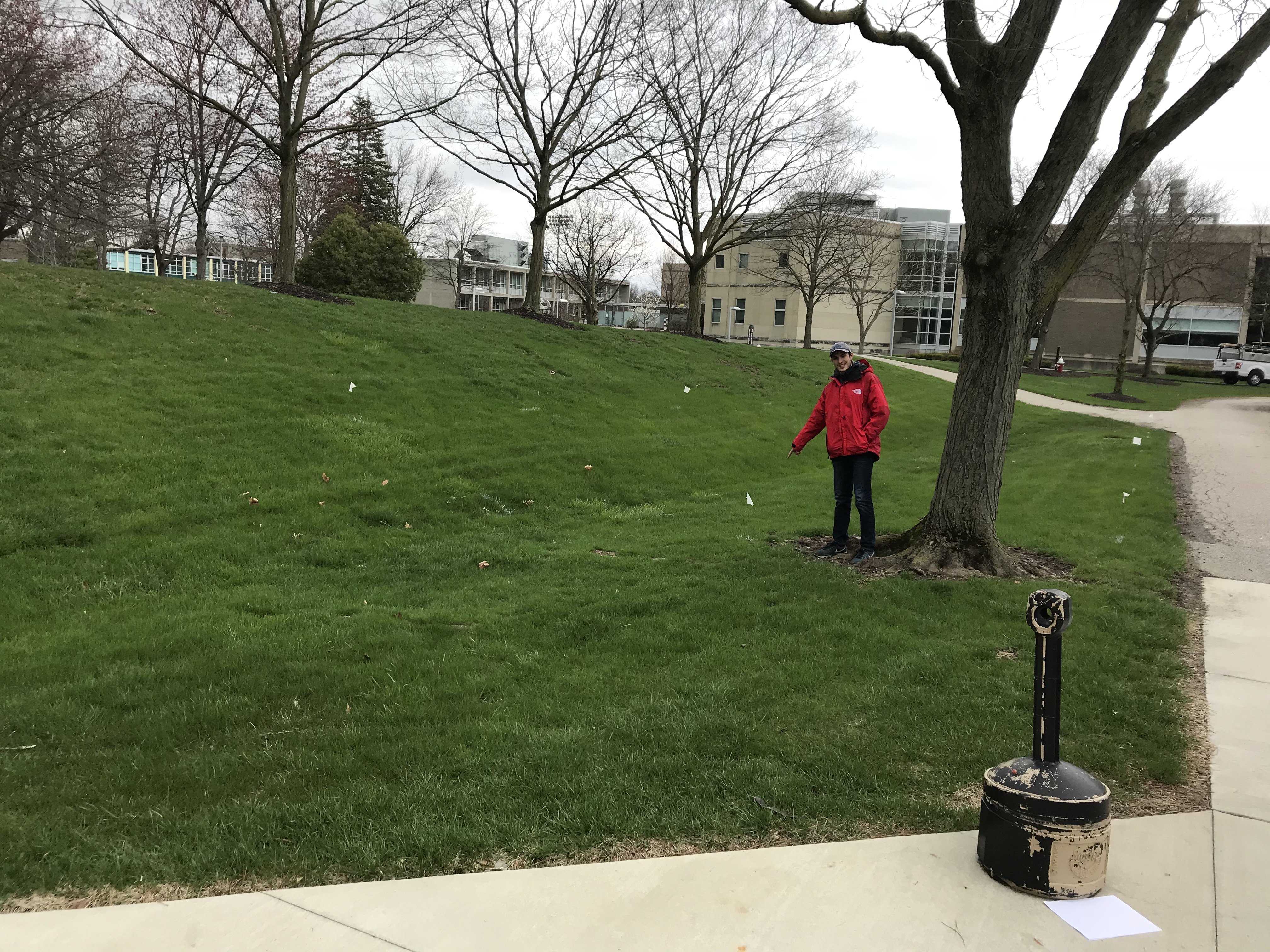
Dustin Braden points to the future location of one of the two bio-retention cells, Spring 2018. Damn cold that day.
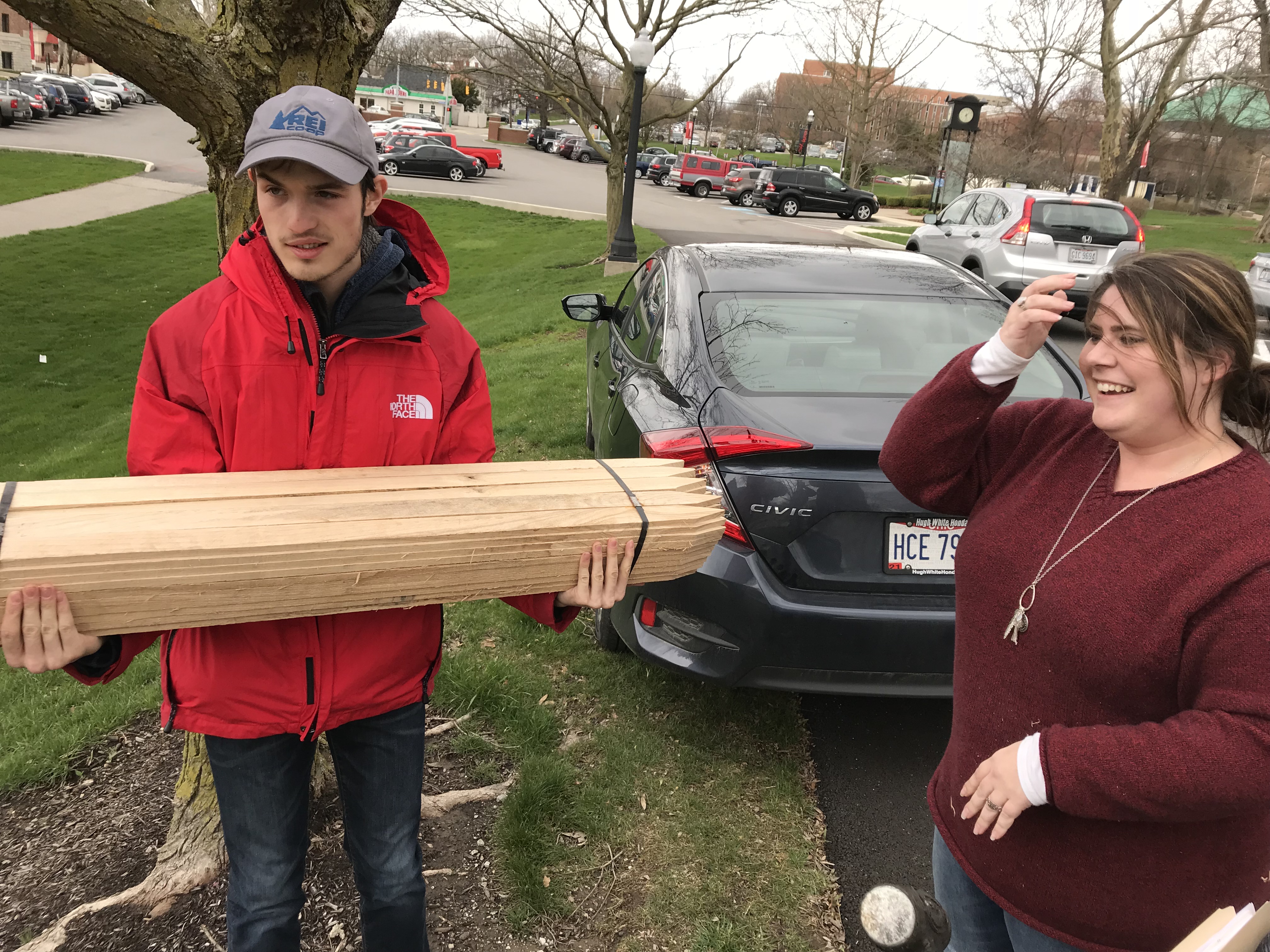
Dustin Braden and Janelle Valdinger admire the stakes which will mark the boundaries of the bio-retention cells.
One of the two cells, right after being planted in the Spring of 2018.

Two signs (above) describe the way bio-retention cells work, and the history of the location: a buried stream runs under/near both cells. See the old map of campus (above).

OWU’s Vogel Lecture 2015: “Where the River Burned: Carl Stokes and the Struggle to Save Cleveland”

In the 60s, Cleveland suffered through violence, spiking crime rates, and a shrinking tax base, as the city lost jobs and population. When the Cuyahoga River caught fire in the summer of 1969, the city was at tis nadir, polluted, and impoverished, struggling to set a new course. Carl Stokes, the first African American mayor of a major U.S. city and his administration set new policies to combat pollution, improve housing and spark downtown development.

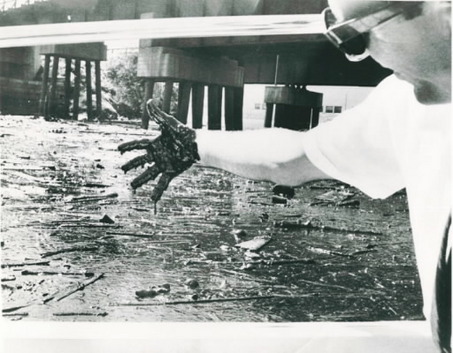
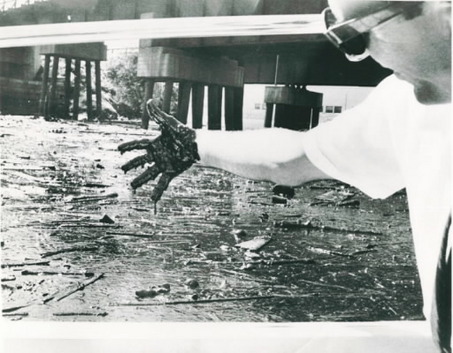
large_Richard-Ellers-Cuyahoga-River-goop

The Cuyahoga River in the 1960s (above, source)

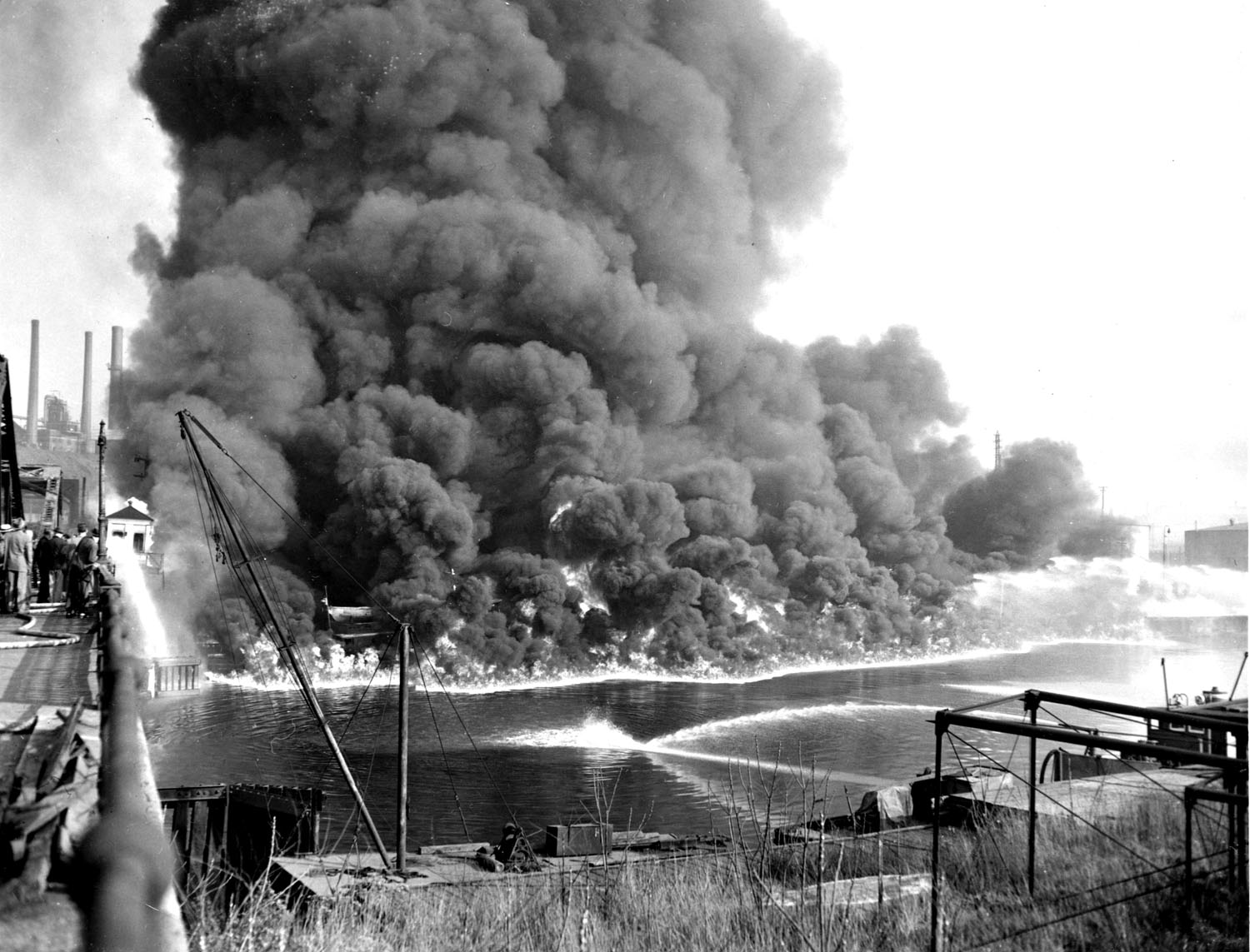
Cuyahoga-Fire1

1952 Cuyahoga River fire (above, source)

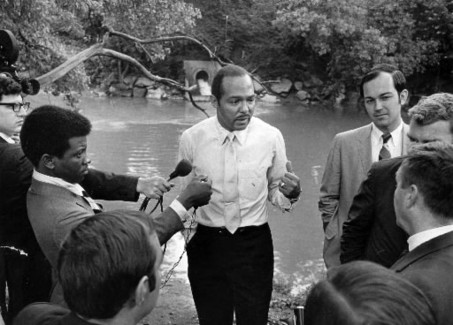
large_Carl-Stokes-River

Mayor Carl Stokes and Ben Stefanski, city utilities director, meet with reporters on the banks of the Cuyahoga, the day after the fire (above, source)


The 31st Annual Joseph and Edith Vogel Lecture

Where the River Burned: Carl Stokes and the Struggle to Save Cleveland.

Monday March 2, 2015 @ 7:30pm
Benes Rooms A & B, Hamilton-Williams Campus Center

In the 60s, Cleveland suffered through violence, spiking crime rates, and a shrinking tax base, as the city lost jobs and population. When the Cuyahoga River caught fire in the summer of 1969, the city was at tis nadir, polluted, and impoverished, struggling to set a new course. Carl Stokes, the first African American mayor of a major U.S. city and his administration set new policies to combat pollution, improve housing and spark downtown development. In this lecture, Dr. David Stradling, Professor of urban and environmental history at the University of Cincinnati, describes Stokes’ attempt to save Cleveland.